- All
- Product Name
- Product Keyword
- Product Model
- Product Summary
- Product Description
- Multi Field Search
Views: 27 Author: Lips Publish Time: 2026-07-21 Origin: sales@eastimage.com.cn


Radiation exposure in high-throughput security environments remains a persistent concern for the public and occupational workforce. Facility managers, security directors, and procurement officers face the ongoing challenge of balancing stringent threat-detection requirements with strict occupational safety regulations (OSHA) and public health standards (FDA). Failure to ensure verifiable safety leads to liability, operational downtime, and staff attrition. Modern X-Ray Scanner Machines mitigate these risks through advanced engineered safeguards, strict regulatory compliance frameworks, and rigorous operational protocols. We will look at how closed-loop cabinet designs and hardware interlocks prevent accidental operator exposure. This guide provides a technical evaluation of scanner safety to inform procurement and policy decisions, ensuring your facility meets all federal mandates while maintaining high screening throughput.
Radiation Context: Passenger exposure from modern security screening is exponentially lower than ambient background radiation or the cosmic radiation experienced during a standard commercial flight.
Engineered Safeguards: Commercial X-ray scanner machines utilize closed-loop cabinet designs, lead-impregnated curtains, and hardware interlocks to prevent accidental operator exposure.
Regulatory Baselines: Procurement must be restricted to systems that strictly adhere to FDA Center for Devices and Radiological Health (CDRH) standards and international equivalent safety mandates.
Operational Accountability: Long-term safety relies on active risk mitigation, including routine calibration, dosimetry monitoring for operators, and mandatory compliance audits.
Table of Contents
Security screening technologies utilize different parts of the electromagnetic spectrum. Traditional cabinet X-Ray Scanner Machines used for baggage and cargo rely on ionizing radiation. This type of radiation has enough energy to remove tightly bound electrons from atoms. Backscatter X-ray systems also use ionizing radiation but scatter the beams off the target to create an image. Conversely, millimeter-wave technology, commonly used for modern passenger body scanning, utilizes non-ionizing radio frequency energy, which lacks the energy to alter cellular structures.
The energy levels and penetration depths required for security screening differ drastically from medical diagnostics. Security imaging aims to detect high-density anomalies, weapons, and material shapes within baggage or cargo. This requires far lower radiation doses than medical imaging, which demands high-definition, diagnostic-level anatomical resolution of soft tissue or bone structures. The resolution gap explains why security scanners operate at significantly reduced power levels compared to hospital equipment.
Technology Type | Radiation Category | Primary Application | Energy Level |
|---|---|---|---|
Cabinet X-Ray | Ionizing | Baggage & Cargo | 140kV - 160kV (Typical) |
Millimeter-Wave | Non-Ionizing | Passenger Screening | Low (Radio Frequency) |
Medical X-Ray | Ionizing | Diagnostic Imaging | High (Variable by tissue) |
Radiation dose is typically measured in microSieverts (µSv). The exposure from a single pass through a security scanner is exceptionally low. Objective data indicates that the dose per scan is a fraction of a microSievert. To contextualize this, natural background radiation exposes individuals to several microSieverts daily. Eating a banana, which contains naturally radioactive potassium, or taking a high-altitude commercial flight exposes a person to more radiation than a standard security scan.
Public concerns often center on frequent flyers, pregnant passengers, and individuals with medical implants. Given the negligible dose levels, regulatory bodies and health organizations generally consider the exposure from modern security screening safe for these demographics. The radiation emitted by baggage scanners is contained within the machine, meaning passengers walking past or standing near the equipment receive virtually zero exposure.
Early implementations of full-body backscatter X-ray screening systems raised concerns among medical professionals and advocacy groups regarding cumulative radiation exposure. Organizations like the Environmental Health Trust questioned the long-term effects of deploying ionizing radiation for primary passenger screening. Although the individual doses were low, the widespread use of ionizing radiation prompted a reevaluation of the technology.
This scrutiny led to an industry-wide transition. Today, passenger screening predominantly utilizes non-ionizing millimeter-wave technology. Ionizing X-Ray Scanner Machines are now almost exclusively reserved for the inspection of baggage, cargo, and parcels, where the radiation is safely contained within shielded cabinets.
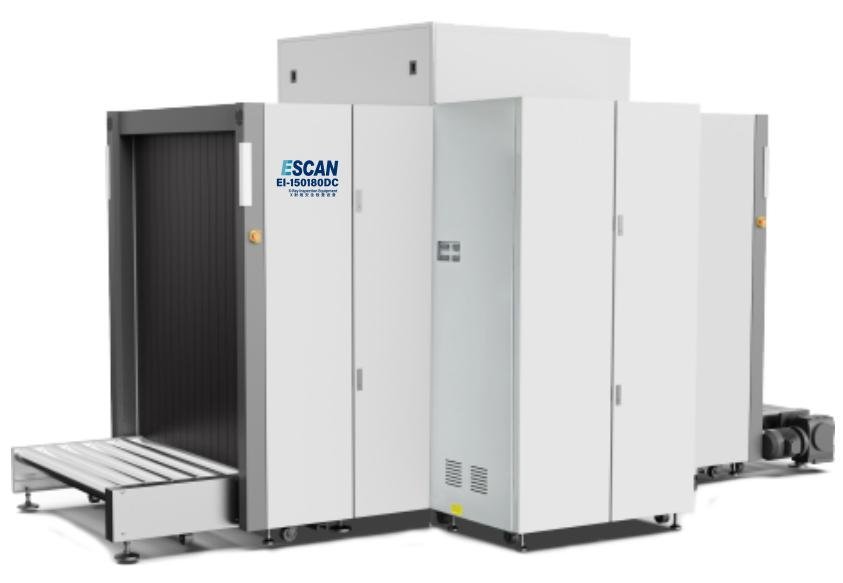
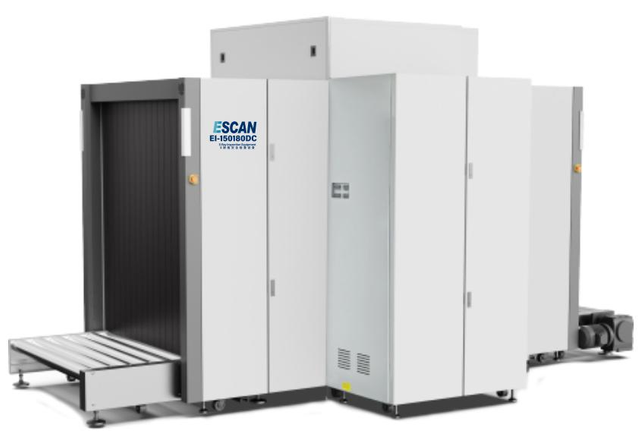
Commercial cabinet X-ray machines are constructed with high-density steel and lead shielding. This robust architecture is engineered to contain scatter radiation entirely within the unit. The shielding ensures that the external environment remains safe for operators working in close proximity throughout their shifts.
Lead-impregnated curtains hang at the entry and exit tunnels of the scanner. These curtains block scatter radiation from escaping when items enter or exit the scanning chamber. Maintaining these curtains is critical; any tears or degradation can compromise safety. A significant physical safety risk involves passengers reaching past these curtains into the active tunnel to retrieve items before the X-ray cycle concludes, which can expose their hands to direct radiation.
Modern scanners incorporate fail-safe mechanisms to prevent accidental exposure. Hardware interlock switches are integrated into all access panels and maintenance doors. If a panel is opened while the machine is active, the interlock immediately terminates X-ray generation, ensuring maintenance personnel or operators are not exposed to the active beam.
Emergency Stop (E-Stop) buttons are strategically placed on the control console and near the entry and exit tunnels. These buttons allow for rapid operator intervention in case of a jam, a safety breach, or equipment malfunction. Pressing the E-Stop instantly cuts power to the X-ray generator and halts the conveyor belt.
Built-in power regulation is a fundamental safety feature. Over-voltage and over-current protection mechanisms prevent electrical anomalies from causing radiation spikes. Consistent power delivery ensures the X-ray generator produces a stable, predictable beam, which is essential for both accurate imaging and safety.
Electrical stability also protects the machine's internal components from damage, preventing secondary hazards such as electrical fires. This robust power management prolongs the equipment's lifespan and maintains its safety certification status.
In the United States, the FDA's Center for Devices and Radiological Health (CDRH) regulates cabinet X-ray systems. Specific performance standards, such as 21 CFR 1020.40, dictate the maximum allowable radiation leakage. Typically, this limit is set at less than 0.5 milliroentgens per hour (mR/hr) measured at a distance of 5 centimeters from any external surface of the cabinet.
Manufacturers must rigorously test their equipment to ensure compliance with these standards before the machines can be deployed. Facilities utilizing these systems must also undergo periodic inspections to verify that the equipment continues to meet these strict leakage limits throughout its operational life.
Occupational Safety and Health Administration (OSHA) regulations establish exposure limits for personnel working near radiation-emitting equipment. For security personnel operating X-Ray Scanner Machines, the exposure must remain well below the occupational limits set for radiation workers.
The ALARA (As Low As Reasonably Achievable) principle guides facility layout and operational protocols. This principle dictates that every reasonable effort must be made to minimize radiation exposure. Implementing ALARA involves optimizing the distance between the operator console and the scanner, utilizing adequate shielding, and managing shift schedules to limit cumulative exposure time.

Strict adherence to Standard Operating Procedures (SOPs) is vital for operator safety. Workflows must include pre-shift safety checks to verify the integrity of lead curtains and the functionality of interlocks and E-Stops. Proper baggage spacing on the conveyor prevents jams and reduces the need for manual intervention.
Safe start-up and shutdown checklists ensure the X-ray tube warms up correctly and the system initializes without accidental beam activation.
Verify all access panels are securely closed and locked.
Inspect entry and exit lead curtains for missing or torn flaps.
Power on the main console and allow the generator to complete its automated warm-up cycle.
Test the conveyor belt forward and reverse functions without activating the X-ray beam.
Engage and disengage one E-Stop to verify the system halts immediately.
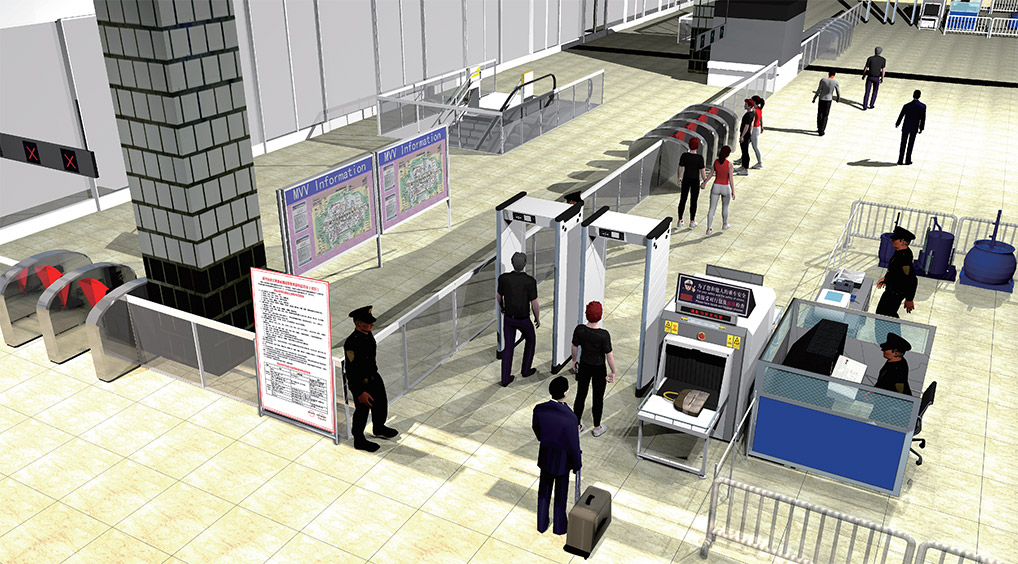
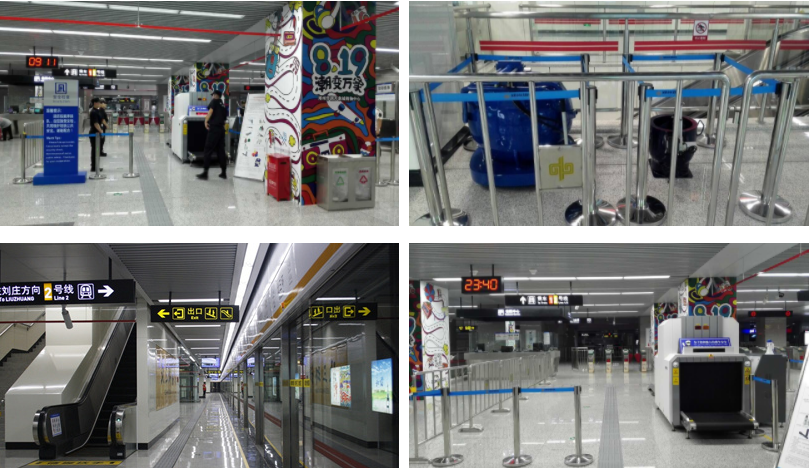
Facilities must define safe bystander and operator exclusion zones, using physical demarcations to keep unauthorized personnel away from the active system. Protocols for clearing tunnel jams must explicitly forbid reaching into the tunnel while the machine is powered on.
While modern cabinet scanners emit negligible external radiation, implementing personal radiation dosimeters (badges) for operators is a best practice for risk mitigation. Dosimeters provide an objective record of an operator's cumulative radiation exposure over time.
Tracking, logging, and auditing dosimetry data proves compliance with occupational safety regulations. This data protects the facility against occupational hazard claims and reassures staff that their working environment is actively monitored and safe.
Operators must undergo comprehensive technical training before operating X-Ray Scanner Machines. This training covers threat recognition and image analysis, but equally important is radiation safety awareness. Operators must understand the principles of radiation, the specific safety features of their equipment, and emergency shutdown procedures.
Certification programs ensure that operators maintain their competency in both security screening and safety protocols. Regular refresher courses are necessary to keep staff updated on new regulations and equipment modifications.
Procurement decisions require balancing the need for high-speed throughput with uncompromising safety standards. High-speed conveyor systems move items quickly but must be paired with adequate safety mechanisms. For instance, the physical length of the entry and exit tunnels must be sufficient to prevent a person from reaching past the lead curtains into the active beam area while the conveyor is moving.
The design must ensure that the speed of the operation does not compromise the integrity of the shielding or the effectiveness of the interlock systems. Faster throughput often requires more robust engineering to maintain the required safety margins.
When evaluating vendors, procurement officers must ask specific questions regarding safety testing and compliance. Request documentation of third-party safety testing and radiation leakage certificates. Verify that the equipment complies with all local and international laws, including FDA CDRH standards or their equivalents.
Assess the vendor's support infrastructure, including preventative maintenance schedules and the availability of replacement parts like lead curtains. A thorough evaluation ensures that the selected equipment will provide reliable, safe operation throughout its lifecycle.
Modern X-Ray Scanner Machines are engineered to deliver high-level security screening while maintaining extremely low radiation exposure through advanced shielding, intelligent safety mechanisms, and strict regulatory compliance. Choosing certified equipment and following proper operational procedures helps organizations create a safer and more reliable screening environment.
At Eastimage, we specialize in advanced X-ray security inspection systems that combine innovative imaging technology with comprehensive radiation safety design for airports, customs, logistics, government facilities, and critical infrastructure. Our solutions help customers achieve reliable threat detection, regulatory compliance, and long-term operational safety.
Before investing in X-Ray Scanner Machines, verify the equipment's safety certifications, radiation shielding performance, maintenance requirements, and operator training programs to ensure long-term compliance and safe daily operation.
A: No. The ionizing radiation used in security scanners passes through items to create an image but does not leave any residual radioactivity. Food, medicine, and electronics are completely safe to use after being scanned.
A: Yes. Commercial cabinet scanners are heavily shielded with steel and lead. Radiation leakage is strictly regulated and kept to negligible levels, making it safe to stand near the machine during operation.
A: Reaching past the lead curtains into the active tunnel can expose your hand to direct ionizing radiation. You should always wait for your items to fully exit the machine before retrieving them.
A: Lead curtains should be replaced when they show signs of physical wear, such as tearing, fraying, or missing strips. Regular daily inspections dictate the replacement schedule to ensure continuous shielding integrity.
A: No. Modern passenger body scanners typically use non-ionizing millimeter-wave technology, which uses radio frequency energy. Baggage scanners use ionizing X-ray technology contained within a shielded cabinet.