
- All
- Product Name
- Product Keyword
- Product Model
- Product Summary
- Product Description
- Multi Field Search
Views: 21 Author: Site Editor Publish Time: 2026-05-14 Origin: Site


Choosing the right x-ray scanner machine can be challenging, especially when deciding between CT and conventional systems. Many buyers struggle to understand how these technologies differ and which one fits their needs. In this article, you will learn how each system works, where they are best used, and how to choose the right solution for your facility.
A conventional x-ray scanner machine works by sending X-rays through an object and capturing the result as a flat image. This image shows different materials based on how much radiation they absorb. Dense materials appear darker, while lighter materials appear brighter. This simple principle allows quick inspection of baggage, parcels, and cargo in many environments.
In practice, the system produces a 2D projection image. All objects inside the scanned item appear on one plane, even when they are stacked or overlapping. This creates a challenge during inspection. Overlapping shapes can hide important details, so image interpretation depends heavily on operator experience and visual judgment.
Operators rely on several techniques to read these images effectively:
Color differentiation highlights organic, inorganic, and mixed materials. This helps identify suspicious items quickly.
Shape recognition allows detection of unusual outlines, even when items overlap in the image.
Image enhancement tools improve contrast and zoom, which makes hidden details easier to examine.
Conventional systems remain widely used because they deliver consistent performance across high-traffic environments. Fast processing speeds and stable output make them suitable for continuous operation.
A CT x-ray scanner machine uses a more advanced approach. Instead of capturing a single projection, the system collects data from multiple angles around the object. Specialized software then reconstructs this data into a detailed three-dimensional representation. This allows deeper inspection compared to traditional 2D imaging.
The scanning process produces a 3D volume image, along with slice-by-slice views. Each slice reveals a specific layer inside the object. This layered visualization removes the confusion caused by overlapping items. Complex or densely packed contents become much easier to analyze.
Key capabilities of CT systems include:
Multi-angle data collection creates a complete internal view instead of a single projection.
Layered image slicing allows inspection of internal structures step by step.
Advanced reconstruction improves object separation and clarity.
This approach significantly improves how complex items are evaluated. Dense materials, tightly packed objects, or irregular shapes can be analyzed with greater precision.
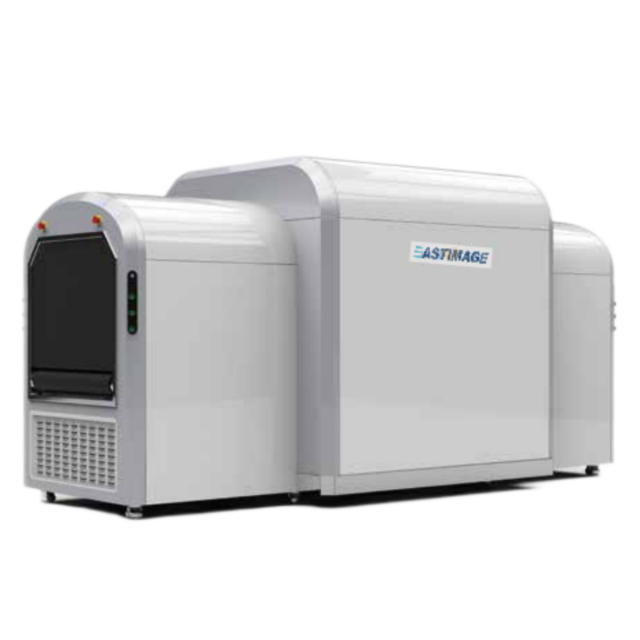
A conventional x-ray scanner machine produces a flat image. All objects appear in a single layer, even when stacked or tightly packed. This creates a situation where shapes overlap and hide each other. Operators must rely on experience, color mapping, and contrast to understand what is inside.
A CT x-ray scanner machine works differently. It collects data from multiple angles, then reconstructs a full 3D image. Instead of guessing what lies behind another object, operators can rotate the image, zoom into layers, and inspect cross-sections. This changes how inspection is done in real environments.
How image type affects inspection in practice:
Flat images show general structure quickly, but overlapping items reduce clarity. Complex bags require more time to interpret.
Layered 3D images allow step-by-step inspection. Each slice reveals hidden details inside dense or mixed objects.
Depth information improves confidence. Operators no longer rely only on color or outline.
| Imaging Aspect | Conventional X-Ray Scanner Machine | CT X-Ray Scanner Machine |
|---|---|---|
| Image format | 2D projection | 3D volume + slices |
| Object visibility | Overlap common | Clear separation |
| Detail level | Moderate | High |
| Operator interaction | Limited zoom and contrast | Rotate, slice, deep inspection |
Detection depends on how clearly objects can be identified. A conventional x-ray scanner machine performs well when items are simple or moderately packed. Clear shapes and standard materials are easy to recognize. In those cases, experienced operators can make quick decisions without advanced tools.
Challenges appear when contents become dense or irregular. Overlapping items can create misleading shapes. This may increase false alarms or require repeated image review. More time is needed to confirm suspicious areas.
CT systems improve this process by enhancing object separation and structural clarity. Multiple-angle data removes overlap confusion. Internal layers become visible, which makes detection more precise.
Key differences in detection performance:
Conventional systems depend heavily on operator interpretation. Accuracy improves with experience, but complexity still slows decision-making.
CT systems support clearer object boundaries. Suspicious items stand out more easily, even inside cluttered baggage.
Automated analysis tools in CT systems can assist detection. This reduces manual workload and improves consistency.
Speed plays a critical role in real operations. A conventional x-ray scanner machine processes items quickly. Continuous scanning keeps queues moving, which is essential in busy checkpoints. Minimal image processing allows operators to make fast decisions.
High throughput environments depend on this efficiency. Airports, logistics hubs, and public venues often require smooth flow. In these cases, conventional systems provide stable performance without slowing operations.
CT systems introduce deeper analysis. Image reconstruction takes more processing time. Operators may spend longer reviewing detailed images, especially when inspecting complex items. However, improved clarity can reduce repeated checks and manual re-screening.
Workflow differences between the two systems:
Conventional systems support fast scanning cycles. Ideal for high-volume environments where speed is critical.
CT systems support deeper review workflows. Suitable for scenarios where accuracy outweighs speed.
Balanced operations may combine both technologies. Routine screening uses conventional systems, while complex cases use CT.
Choosing between systems involves more than performance. A conventional x-ray scanner machine is easier to install and operate. Training requirements are lower. Maintenance is simpler, which reduces downtime and operational burden.
CT systems involve more complex hardware and software. Installation may require additional space and technical setup. Operators need training to use advanced features such as slicing and 3D manipulation. Maintenance also requires more specialized support.
Key considerations for buyers:
Initial investment differs. Conventional systems are generally more affordable, while CT systems require higher upfront cost.
Operational complexity varies. Simpler systems reduce training time and daily management effort.
Long-term value depends on use case. A higher-cost system may deliver better results in complex environments.
A conventional x-ray scanner machine fits situations where speed and simplicity drive the decision. Daily screening tasks often involve standard baggage or parcels. Most items do not require deep analysis. A fast and stable system keeps operations moving without interruption.
Routine environments benefit the most from this type of system. Public entrances, office buildings, and transportation hubs need reliable screening across long working hours. Smooth workflow matters more than advanced image reconstruction. Operators focus on identifying obvious risks quickly and consistently.
Typical scenarios where conventional systems perform well:
Routine baggage screening in public areas. Large volumes require quick processing and minimal delay.
Parcel inspection in logistics centers. Stable throughput ensures efficiency across daily operations.
Cost-sensitive projects. Budget limits make practical solutions more attractive than advanced systems.
Why many facilities still choose this type of x-ray scanner machine:
Lower operational complexity reduces training time. Staff can become effective faster.
Faster image output supports continuous flow. Queues stay manageable during peak hours.
Maintenance remains straightforward. Downtime risk stays low in long-term use.
| Application Type | Why Conventional X-Ray Fits | Operational Benefit |
|---|---|---|
| Public building security | Simple screening requirements | High efficiency |
| Logistics parcel hubs | Large volume, repetitive inspection | Stable throughput |
| Commercial facilities | Budget-focused decision making | Lower total cost |
A CT x-ray scanner machine becomes valuable when inspection complexity increases. Dense or cluttered items often hide important details. Standard 2D imaging struggles in these situations. More advanced visualization helps reveal hidden structures and improves detection confidence.
High-security environments demand more than speed. Clear identification of internal objects becomes critical. In these cases, deeper analysis reduces uncertainty. Operators can inspect layers, rotate images, and focus on specific areas inside the object.
Situations where CT systems show clear advantages:
High-security screening areas. Accuracy matters more than processing speed.
Dense or overlapping baggage. Complex contents require deeper visualization.
Advanced inspection workflows. Detailed image review supports better decision-making.
Key reasons facilities move to CT-based x-ray scanner machine systems:
Improved object separation reduces confusion during inspection. Operators spend less time guessing.
Layered imaging reveals hidden items. Internal structures become easier to understand.
Higher detection confidence supports critical environments. Decision quality improves under pressure.
| Inspection Need | CT X-Ray Scanner Machine Advantage | Practical Result |
|---|---|---|
| Complex baggage analysis | 3D layered visualization | Better clarity |
| High-risk environments | Advanced detection capability | Higher confidence |
| Detailed inspection tasks | Multi-angle reconstruction | Accurate interpretation |
Choosing the right x-ray scanner machine depends on real operating conditions. Product specifications alone do not tell the full story. Decision-making should focus on how the system performs in daily use.
Different environments require different approaches. A busy airport checkpoint differs from a logistics warehouse. A government facility has different risk levels compared to a commercial building. Matching the system to these conditions improves long-term performance.
Key factors to evaluate before selecting a system:
Risk level of the environment. Higher risk requires deeper inspection capability.
Type of objects being scanned. Dense or irregular items need better image detail.
Inspection volume. High throughput environments need faster systems.
Staffing and workflow. Complex systems require trained operators and structured processes.
Choosing the right x-ray scanner machine starts from real use, not just product specs. Many buyers focus on technology first, but the better approach begins from the inspection task itself. Clear answers to a few key questions help avoid costly mistakes later.
Start with practical evaluation points:
Type of items being screened matters a lot. Small parcels, large baggage, or irregular cargo require different system sizes and imaging capabilities. A mismatch here often leads to poor performance.
Complexity of inspection targets affects image requirements. Dense, layered, or mixed materials need deeper analysis. Simple items do not require advanced imaging.
Throughput expectations define system speed. High-traffic checkpoints need fast processing. Slower systems can create bottlenecks and long queues.
Importance of image detail varies by application. Some environments need only quick identification. Others require precise analysis and higher detection confidence.
Think through real operating conditions instead of theory:
Daily workload patterns. Peak hours often reveal system limitations.
Operator skill level. Advanced systems require trained staff.
Security level expectations. Higher risk environments demand stronger detection capability.
A strong comparison goes beyond basic specifications. Real value comes from how the system performs during daily use. Buyers should focus on a combination of physical capacity, imaging performance, and operational usability.
Important features to evaluate carefully:
Tunnel size defines what can be scanned. Larger tunnels support cargo and bulky items, while smaller systems fit compact environments.
Imaging quality affects detection ability. Multi-energy imaging, dual-view options, or CT reconstruction all improve visibility in different ways.
Software tools enhance operator efficiency. Image zoom, pseudo-coloring, and automated detection features reduce manual workload.
Ease of operation influences long-term performance. Simple interfaces reduce training time and improve consistency across shifts.
Operational aspects often overlooked:
Maintenance requirements. Frequent service interruptions reduce system availability.
Service support availability. Quick response times help avoid long downtime.
Integration capability. Some systems connect with conveyor lines or security networks.
Many buyers make decisions based on incomplete understanding. Focusing only on one factor often leads to poor system performance in real use. Avoiding common mistakes helps ensure the selected x-ray scanner machine delivers long-term value.
Frequent decision errors include:
Choosing based only on price. Lower cost may seem attractive, but it often leads to limited capability or higher long-term costs.
Ignoring workflow realities. A system that looks good on paper may not fit actual daily operations or staffing conditions.
Assuming CT is always better. Advanced technology is useful, but not every environment needs it.
Thinking conventional systems are outdated. In many scenarios, they remain the most efficient and practical solution.
Better decision approach:
Balance performance, cost, and operational fit. No single factor should dominate the decision.
Match system capability to real inspection tasks. Over-specifying increases cost without clear benefit.
Consider long-term operation. Maintenance, training, and support all affect total value.
CT systems provide 3D imaging and deeper analysis, while a conventional x-ray scanner machine supports fast screening. Eastimage offers both solutions, helping users balance speed, accuracy, and reliable service. By matching the right technology to each scenario, Eastimage helps improve inspection accuracy, maintain efficient workflows, and support long-term operational reliability.
A: A x-ray scanner machine inspects baggage, parcels, and cargo for security and safety purposes.
A: A CT x-ray scanner machine creates 3D images, while conventional systems show 2D projections.
A: A conventional x-ray scanner machine offers faster throughput and simpler operation for routine screening.
A: A CT x-ray scanner machine improves detection by showing layered internal structures more clearly.
A: Choose a x-ray scanner machine based on object type, throughput needs, and required inspection detail.