- All
- Product Name
- Product Keyword
- Product Model
- Product Summary
- Product Description
- Multi Field Search
Views: 23 Author: Site Editor Publish Time: 2026-07-22 Origin: Site


Modern logistics and distribution centers face a critical operational tension. Facility managers must intercept concealed threats, contraband, and hazardous materials without compromising high-speed throughput. Manual parcel inspection creates massive bottlenecks during peak freight processing. It is labor-intensive, intrusive, and highly prone to human error. Legacy screening methods simply cannot keep pace with the volume demands of global shipping networks.
The principle of Non-Intrusive Inspection (NII) solves this bottleneck. Modern X-Ray Scanner Machines allow security and logistics teams to thoroughly examine package contents without opening them. This preserves packaging integrity and maintains a strict chain of custody. Operators can see inside boxes, pallets, and containers instantly, identifying anomalies before they enter the transportation network.
These advanced systems serve as the necessary technical bridge between strict regulatory compliance, inventory verification, and operational efficiency. By deploying the right scanning technology, parcel hubs can meet aviation security mandates while maintaining the rapid processing speeds required for daily targets.
Throughput vs. Penetration: Balancing conveyor speed with the necessary steel penetration depth is the primary technical trade-off when selecting an X-ray scanner.
Material Discrimination: Dual-energy technology is the baseline for modern hubs, allowing operators to distinguish between organic, inorganic, and metallic materials.
Dual-Use Operational Value: Modern screening goes beyond security, acting as an audit mechanism to verify shipping manifest accuracy and detect outbound cargo discrepancies.
Form Factor Alignment: Procurement must strictly align tunnel size and load capacity with the specific operational tier—from small parcel sortation to full cargo pallet and shipping container screening.
Table of Contents
Successful deployment requires establishing clear baseline metrics on the warehouse floor. Logistics managers track minimum items processed per hour (UPH), acceptable false alarm rates (FAR), and overall machine uptime percentage. High UPH ensures the scanner does not become a choke point during peak sorting windows. Low FAR prevents operators from wasting time on manual secondary inspections.
The industry has shifted from reactive security to proactive, integrated screening workflows. Instead of isolating security checks to a separate, slow-moving area, modern hubs integrate scanners directly into the main sortation lines. This continuous flow model requires machines that can operate reliably under constant heavy loads. Photo-eye sensors and programmable logic controllers (PLCs) manage the spacing of parcels entering the lead curtains to prevent overlapping images.
Air freight operations face strict regulatory frameworks. Programs like the TSA Certified Cargo Screening Program mandate specific screening protocols before cargo can be loaded onto passenger aircraft. X-Ray Scanner Machines fulfill these exact requirements by providing verifiable proof of inspection at the piece level.
Compliance involves rigorous documentation and image archiving. Modern scanners automatically save high-resolution images linked to specific tracking numbers or waybills. This creates a reliable audit trail. Security directors can retrieve historical scan data if a shipment is flagged later in the supply chain. Data retention policies usually require these images to be stored locally or on secure servers for 30 to 90 days.

Distribution centers increasingly use X-ray screening to verify outbound shipments. Operators can confirm that a package contains the correct items before final dispatch, ensuring order accuracy. This dual-use application transforms a security expense into a quality control asset.
Scanners help identify discrepancies between actual package contents and shipping labels without physical opening. If a manifest lists lightweight electronics but the scan reveals dense metallic blocks, operators can intercept the package immediately. This prevents shipping fraud and reduces inventory shrinkage.
Operational Goal | Traditional Method | X-Ray Screening Advantage |
|---|---|---|
Threat Detection | Manual physical search | Non-intrusive, immediate visual confirmation |
Manifest Verification | Weighing and opening boxes | Density and shape analysis without breaking seals |
Throughput | 50-100 units per hour | Up to 1,200+ units per hour on automated lines |
Single-energy scanners have significant limitations in modern freight environments. They only provide structural outlines based on material density, resulting in high false-positive rates for dense shipments. Operators cannot easily distinguish between a harmless block of plastic and a dangerous organic compound.
Dual-energy scanners are the standard for logistics hubs. They differentiate organic from inorganic materials via atomic number analysis. The system assigns standard color codes to the monitor display. This allows operators to quickly identify potential threats hidden among everyday items.
Orange: Organic materials (plastics, paper, food, explosives, narcotics).
Blue: Metallic and inorganic materials (steel, copper, weapons).
Green: Mixed materials and light metals (aluminum, glass).
Computed Tomography (CT) technology provides 3D imaging for complex freight environments. When overlapping items obscure 2D visibility, CT scanners allow operators to rotate the image and view individual components from any angle. This is highly effective for dense, tightly packed shipments where items shield one another.
Logistics hubs must weigh the operational trade-offs. CT scanners offer higher detection accuracy and threat isolation, but they process items slower than standard 2D systems. They also require more robust floor support due to their heavy rotating gantries and generate larger file sizes for image archiving.
High-energy generators, ranging from 160kV to several MeV, are necessary to penetrate ultra-dense cargo. Standard parcel scanners cannot see through thick steel engine blocks or heavily shielded industrial equipment. High-energy systems provide the penetrating power needed for these heavy freight applications.
Operating high-energy systems involves managing workflow carefully. There is a direct relationship between the depth of penetration and the time required to compile high-resolution security images. Scanning massive, dense pallets takes longer, requiring logistics hubs to stage freight properly to prevent backlogs.
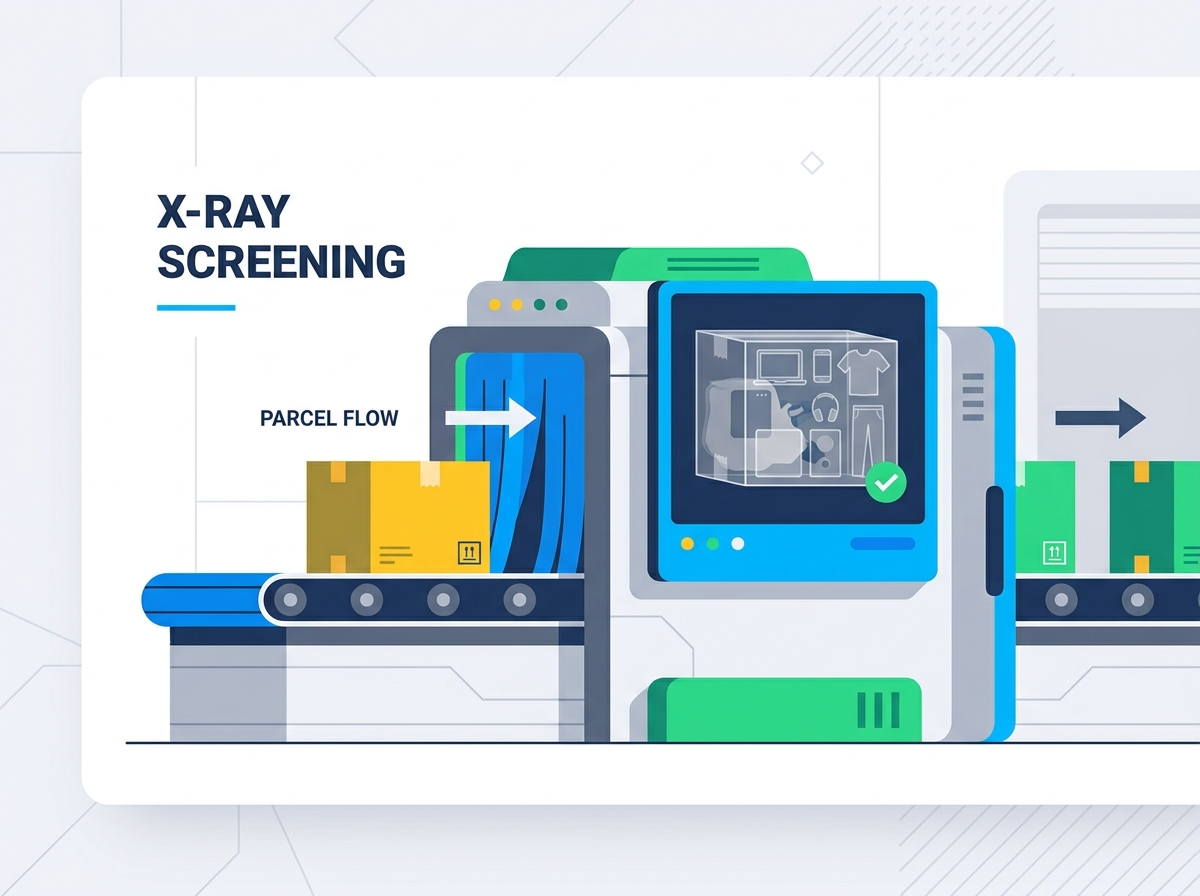
Small parcel scanners feature compact tunnel sizes, typically around 50cm x 30cm. They are optimized for high-speed conveyor integration and rapid image generation. These machines process lightweight packages quickly, keeping fast-moving sortation lines flowing smoothly.
The primary use cases include last-mile distribution centers, corporate mailrooms, and e-commerce sorting hubs. Because the packages are small and relatively uniform, operators can evaluate images rapidly. The conveyor belts on these units usually run synchronously with the facility's main induction belts.
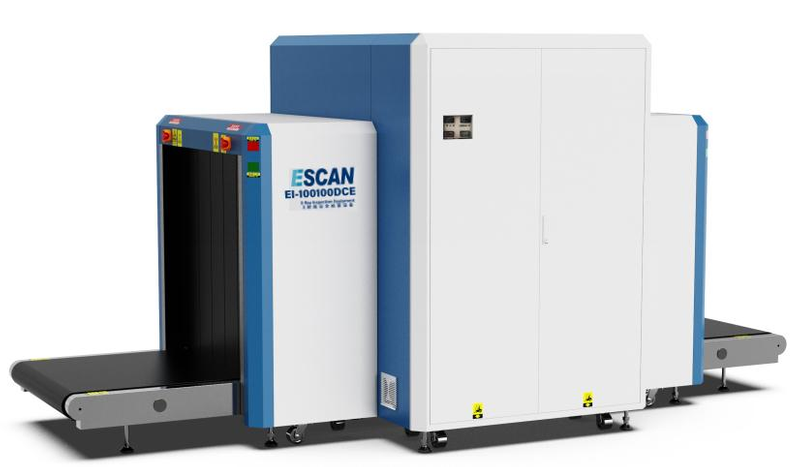
Mid-sized systems feature larger tunnel sizes, often around 100cm x 100cm. They utilize reinforced conveyors designed to handle heavier individual loads, such as oversized boxes and large luggage. These machines offer a balance between capacity and footprint.
Break-bulk facilities and regional sorting hubs rely on these systems. They handle the diverse mix of freight sizes that cannot fit through small parcel scanners but do not require massive pallet-sized machines. The rollers and belt drives are upgraded to handle weights up to 200 kg.
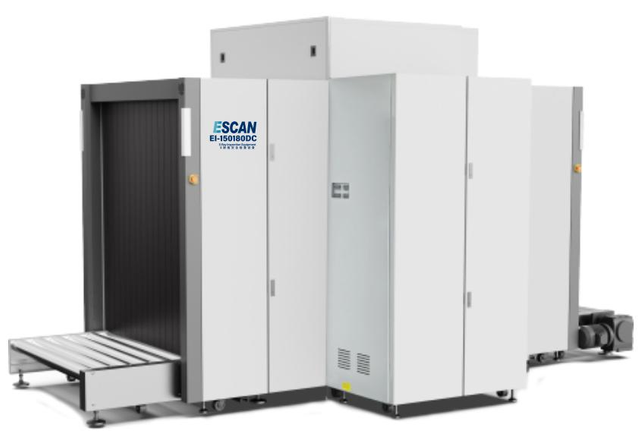
Cargo pallet scanners are built for heavy industry. They feature massive tunnel dimensions, heavy-duty roller beds capable of supporting 3,000+ kg, and high-generator output. These machines scan entire consolidated pallets in a single pass.
Seaports, international air freight terminals, and bulk distribution centers use these systems extensively. Scanning full pallets eliminates the need to break down consolidated shipments. Forklift operators load the pallets directly onto the motorized roller beds, which feed the cargo through the lead-shielded tunnel.
Gantry and portal systems scan fully loaded sea and land containers. These high-energy drive-through or pass-through portals use powerful linear accelerators to penetrate thick steel shipping containers. Trucks drive slowly through the portal, or the gantry moves over the stationary container.
Throughput performance benchmarks are critical for these massive systems. Ports aim to achieve average scan cycle times of 30 seconds per container. Maintaining this speed is essential to prevent severe port congestion and keep global supply chains moving efficiently.
Scanner Type | Typical Tunnel Size | Max Load Capacity | Primary Application |
|---|---|---|---|
Small Parcel | 50cm x 30cm | 150 kg | E-commerce, Mailrooms |
Freight System | 100cm x 100cm | 200 kg | Regional Sortation Hubs |
Cargo Pallet | 180cm x 180cm | 3,000+ kg | Air Freight Terminals |
Manufacturer specifications for steel penetration indicate a machine's ability to screen dense pallets. A scanner rated for 35mm steel penetration will struggle with heavy industrial freight, whereas a 50mm rating provides clearer images through denser materials. Procurement teams must match the penetration rating to their heaviest typical cargo.
AWG (American Wire Gauge) resolution standards define the scanner's ability to detect fine wires. High AWG resolution is critical for identifying the intricate wiring associated with explosive devices. A higher AWG number indicates the ability to see thinner wires. For example, a 40 AWG rating means the machine can display a wire thinner than a human hair.

Integrating a scanner's programmable logic controller (PLC) with the hub's existing conveyor network is vital. The scanner must communicate seamlessly with upstream and downstream belts to prevent jams. Baseline speed metrics typically range from 0.20 m/s to 0.24 m/s for standard parcel conveyors.
Variable frequency drives (VFDs) manage the motor speeds to ensure smooth transitions. Sudden speed changes or belt slipping can cause image distortion, rendering the scan useless. Consistent, controlled movement is necessary for clear image generation. The PLC handles the handshake signals, stopping the induction belt if the scanner tunnel is occupied.
Automated threat recognition (ATR) software reduces operator cognitive load. Mature ATR algorithms highlight suspicious shapes or densities, drawing the operator's attention to potential threats. This acts as a reliable secondary check, reducing human error during long shifts.
Network capabilities allow for remote screening via multiplexing. Images are sent to a centralized, quiet security room rather than analyzed at the noisy machine location. This improves operator focus and allows a smaller team of experts to monitor multiple screening lines simultaneously. The software queues the images and routes them to the next available operator.
Inadequate site preparation poses a major implementation risk. Massive 3-ton pallet scanners require sufficient floor load-bearing capacity. Installing heavy equipment on unsupported floors can cause structural damage and misalign the scanning components, leading to distorted images and mechanical failure.
Dedicated power line requirements must be addressed early. High-energy generators draw significant current and require stable, clean power to function correctly. Voltage drops or surges can damage sensitive X-ray components and disrupt operations. Facilities often need to install dedicated transformers and uninterruptible power supplies (UPS) to protect the equipment.
To maximize the effectiveness of your screening operations, execute these next steps:
Audit your current package sizes and weights to determine the exact tunnel dimensions and conveyor capacities required.
Assess your facility's floor strength and power infrastructure before finalizing any heavy equipment installation plans.
Integrate your screening data with your warehouse management system to improve outbound quality control.
Establish a continuous training program for operators to maintain high threat detection rates.
X-Ray Scanner Machines have become an essential part of modern logistics operations, helping organizations improve cargo security, maintain high throughput, and ensure accurate shipment inspection. Choosing the right scanning solution enables logistics providers to strengthen supply chain security while improving operational efficiency and regulatory compliance.
At Eastimage, we specialize in advanced X-ray security inspection systems for logistics, cargo screening, airports, ports, and distribution centers worldwide. Our innovative scanning solutions and professional technical support help customers improve inspection accuracy, streamline operations, and build safer, more efficient logistics networks.
Before selecting X-Ray Scanner Machines for your facility, evaluate your cargo types, throughput requirements, available installation space, and future expansion plans to ensure the most suitable screening solution for long-term operational success.
A: Standard parcel scanners typically operate at conveyor speeds between 0.20 m/s and 0.24 m/s. Depending on package size and operator analysis time, they can process hundreds of items per hour without causing line backups.
A: Single-energy scanners only show structural outlines based on density. Dual-energy scanners analyze the atomic number of materials, allowing them to color-code images to differentiate between organic, inorganic, and metallic items.
A: No, standard security X-ray scanners will not damage electronics, hard drives, or magnetic media. The radiation dose is too low to affect modern electronic components or erase data.
A: AWG stands for American Wire Gauge. In X-ray specifications, it measures the machine's ability to display fine wires on the monitor, which is crucial for detecting the components of explosive devices.
A: Hubs use scanners on outbound freight to verify manifest accuracy. It allows them to confirm the contents of a package without opening it, preventing shipping fraud and reducing inventory shrinkage.