- All
- Product Name
- Product Keyword
- Product Model
- Product Summary
- Product Description
- Multi Field Search
Views: 7 Author: Site Editor Publish Time: 2026-07-22 Origin: Site


Customs and border protection agencies face escalating pressure to intercept contraband, weapons, and undeclared goods without creating logistical bottlenecks at high-volume checkpoints. The core problem lies in balancing rigorous non-intrusive inspection with operational throughput. Selecting the wrong equipment leads to false alarms, operator fatigue, severe traffic backlogs, and compromised national security. Manual cargo inspections present severe physical dangers to border officers, including exposure to hazardous materials, weaponized chemicals, fentanyl, and unstable structural loads. To solve these challenges, agencies need a structured procurement framework. This guide breaks down how to align specific operational requirements—from baggage screening to full-vehicle inspection—with the correct technical specifications of modern scanning equipment.

Application Dictates Architecture: Tunnel size and generator power must align strictly with the target cargo (e.g., 160kV for standard baggage vs. 6MeV+ for dense shipping containers).
Imaging Technology Determines Accuracy: Dual-energy and backscatter technologies serve different threat-detection purposes; relying on outdated single-energy systems increases manual search rates.
AI and Sensor Integration Reduce Bottlenecks: Hardware capabilities are increasingly capped by software limitations. AI-assisted threat detection, automated gate systems, and OCR integration are now critical for maintaining throughput.
Occupational Safety is a Key Driver: Implementing advanced NII technology significantly reduces the necessity of manual inspections, safeguarding officers from biological, chemical, and physical hazards.
Table of Contents
Evaluating border checkpoint equipment requires a clear understanding of operational demands. You must weigh throughput requirements against penetration capabilities. Agencies calculate the required number of vehicles or pallets processed per hour. You then balance this metric against the time needed for high-penetration scanning. High-energy scans take longer but reveal deeper threats in dense cargo. When dealing with mixed freight, operators need systems that can switch scanning modes rapidly to maintain traffic flow.
Detection accuracy and false alarm rates dictate border flow efficiency. You must establish baseline metrics for acceptable false alarms. High false alarm rates trigger unnecessary manual inspections. These manual checks quickly cripple traffic flow at busy land crossings and seaports. Your equipment must differentiate between benign anomalies and actual threats reliably. Implementing advanced X-Ray Scanner Machines ensures that operators spend less time resolving false positives and more time analyzing genuine security risks.
Occupational safety remains a primary success metric. High-resolution scanning minimizes physical contact with dangerous materials. Officers can identify explosive precursors or synthetic opioids remotely. This capability keeps personnel out of harm's way during routine screening operations. Furthermore, automated scanning portals reduce the need for officers to climb inside unstable shipping containers, preventing physical injuries associated with shifting cargo.
Environmental and infrastructure constraints also dictate machine selection. Border crossings often operate in extreme weather conditions. You must account for limited physical footprints, remote deployment challenges, and power grid stability. Equipment deployed in harsh environments requires robust climate control and ruggedized components to maintain continuous operation. Dust, humidity, and extreme temperature fluctuations will degrade sensitive imaging sensors if the system lacks proper environmental shielding.
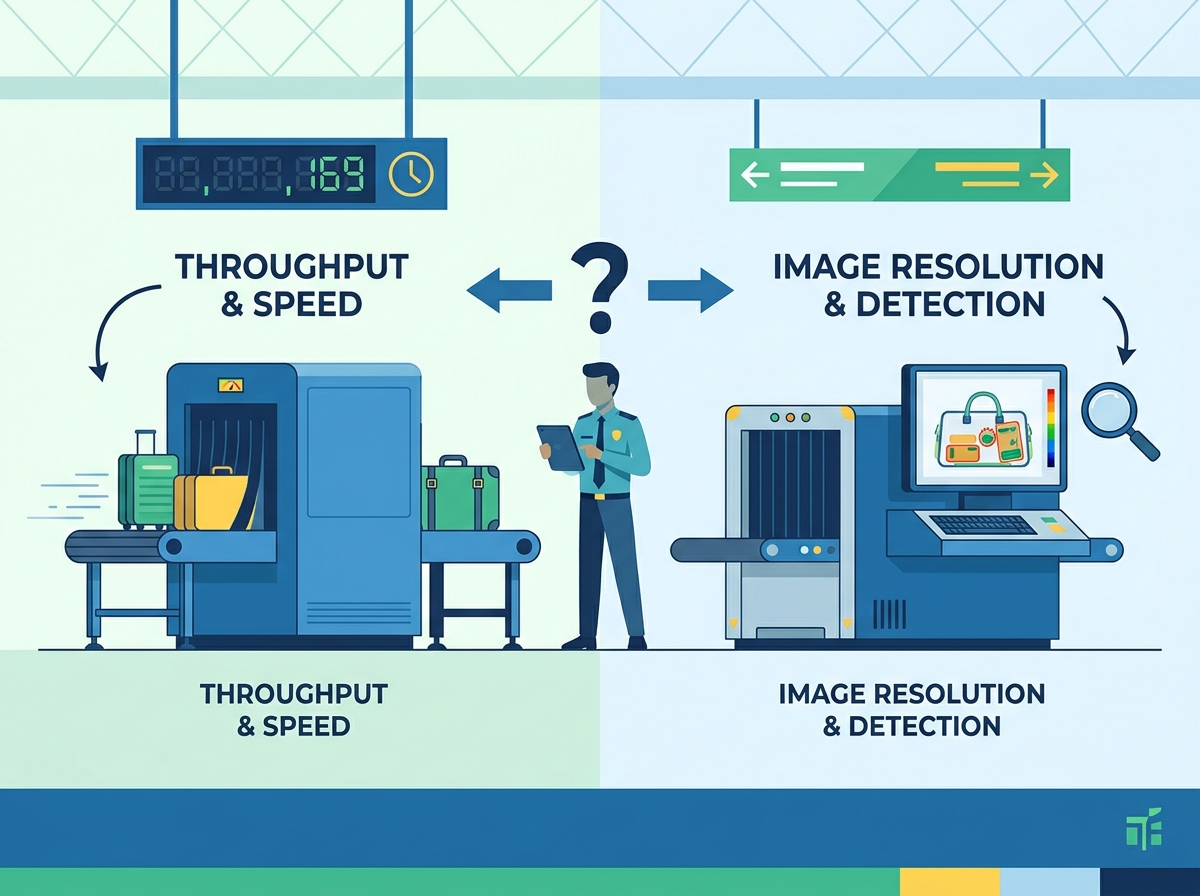
Pedestrian border crossings and airport customs checkpoints rely heavily on baggage scanners. Small parcel logistics facilities also utilize these compact units. They feature smaller tunnel sizes, typically ranging from 60x40cm to 100x100cm. The generator power usually sits between 140kV and 160kV. These specifications optimize the equipment for separating organic and inorganic materials in personal luggage. Operators use these machines to quickly identify agricultural contraband, undeclared currency, and small weapons hidden in traveler backpacks.
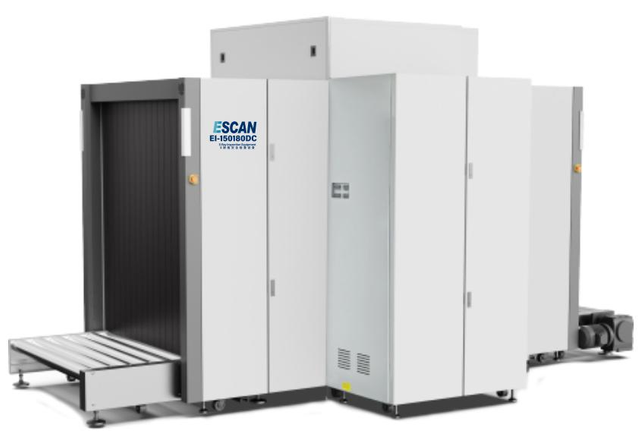
Seaports, air cargo terminals, and land border warehouses require robust pallet scanners. These units feature large tunnel dimensions, often reaching 150x180cm. Heavy-duty conveyor rollers support massive cargo weights. They utilize higher penetration power, generally between 200kV and 320kV. This increased energy allows operators to see through densely packed commercial goods and consolidated shipments. When inspecting break-bulk cargo, the ability to penetrate multiple layers of packaging without unpacking the pallet saves countless hours of manual labor.
High-volume land border crossings and commercial ports of entry deploy drive-through scanners. You will find these systems in portal, gantry, or mobile configurations. The choice depends on your site's mobility and footprint requirements. They offer massive penetration capabilities, utilizing up to 9MeV linear accelerators to inspect entire trucks. These systems incorporate strict safety mechanisms, such as cab-skipping technology, to minimize driver radiation exposure. Mobile configurations allow agencies to relocate scanning checkpoints based on shifting threat intelligence, providing tactical flexibility at porous borders.
Scanner Type | Typical Tunnel Size | Generator Power | Primary Use Case |
|---|---|---|---|
Baggage & Parcel | 60x40cm to 100x100cm | 140kV - 160kV | Pedestrian crossings, airports, small parcels |
Pallet & Break-Bulk | Up to 150x180cm | 200kV - 320kV | Air cargo, seaports, warehouse logistics |
Vehicle & Container | Drive-through portal | 4MeV - 9MeV | Land borders, full shipping containers |
Understanding steel penetration physics is critical for procurement. A standard 320kV generator cannot penetrate a fully loaded 40-foot shipping container. Dense cargo absorbs low-energy X-rays completely. Inspecting heavy freight requires high-energy linear accelerators operating in the mega-electron volt (MeV) range. You must map generator power to specific cargo densities. For example, achieving 300mm of steel penetration requires at least a 4MeV to 6MeV system. If your checkpoint processes shipments of scrap metal or dense machinery, you will likely need a 9MeV system to ensure complete visibility through the cargo load.
Dual-energy technology plays a vital role in material discrimination. It uses high and low-energy beams to calculate effective atomic numbers. This process color-codes organic, inorganic, and metallic materials on the operator's screen. Backscatter technology excels at detecting organic anomalies. It easily highlights narcotics, plastic explosives, or currency hidden within shallow vehicle panels or walls. Computed Tomography (CT) introduces 3D imaging to customs operations. CT provides exceptional high-resolution threat identification, though it operates at slower throughput speeds. Selecting the right imaging technology depends entirely on the specific threats your agency targets most frequently.

Modern border protection relies on networked ecosystems rather than standalone machines. AI-driven platforms automate the detection of specific threats like weapons or cigarette smuggling. This automation significantly reduces the operator's cognitive load. Multi-sensor data fusion integrates X-Ray Scanner Machines with License Plate Recognition and manifesting software. This integration flags anomalies automatically before the vehicle even stops. Centralized image analysis allows off-site experts to review scans in real-time. Multiplexing standardizes threat evaluation across multiple border checkpoints, ensuring that a suspicious scan in one location can be analyzed by a specialized team at headquarters.
Radiation safety and regulatory compliance demand strict adherence. Non-intrusive inspection systems must meet international and local standards, including FDA, ANSI N43.17, and EURATOM regulations. You mitigate radiation risks through automated dosimetry and fail-safe safety interlocks. Always verify that equipment holds recognized security certifications before procurement. Look for TSA, ECAC, or country-specific approved product lists to ensure operational validity. Failing to meet these standards can result in immediate facility shutdowns and severe legal liabilities.
System downtime creates catastrophic operational impacts at busy border crossings. A failed scanner immediately causes traffic backups stretching for miles. You must secure Service Level Agreements with guaranteed response times. Maintain localized spare parts inventories to minimize repair delays. Operator fatigue introduces significant human-in-the-loop risks. Mitigate cognitive decline through ergonomic workstation design, mandatory rotation schedules, and AI-assisted threat highlighting tools. Continuous training programs ensure that operators remain sharp and capable of identifying evolving concealment methods used by smuggling syndicates.
Establish a strict preventative maintenance schedule based on scan volume rather than calendar days.
Conduct weekly radiation leak tests using calibrated dosimeters around the exclusion zone perimeter.
Implement a mandatory 30-minute rotation schedule for image analysts to prevent screen fatigue.
Audit the AI threat detection algorithms quarterly against new, known smuggling concealment methods.
Maintain a localized cache of critical spare parts, specifically replacement generator tubes and sensor arrays.
X-Ray Scanner Machines play a vital role in strengthening customs and border security by enabling fast, accurate, and non-intrusive inspection of cargo, vehicles, and passenger baggage. Selecting the right inspection system helps border agencies improve operational efficiency, enhance threat detection, and maintain secure cross-border trade and transportation.
At Eastimage, we specialize in advanced X-ray security inspection systems for customs, border control, airports, ports, and critical infrastructure. Our innovative screening technologies and professional technical support help customers improve inspection efficiency, strengthen security capabilities, and meet evolving international compliance requirements.
Before selecting X-Ray Scanner Machines for customs or border operations, evaluate your inspection targets, traffic volume, penetration requirements, installation environment, and future expansion plans to ensure the most effective long-term security solution.
A: Standard cargo inspection typically requires about 300mm of steel penetration, necessitating 4-6MeV linear accelerators. Densely packed commercial freight may require up to 400mm of penetration, which demands powerful 9MeV systems to ensure complete visibility through the container.
A: Dual-energy systems emit both high and low-energy X-ray beams. The system measures how different materials absorb these beams to calculate their effective atomic numbers. It then assigns specific colors to organic, inorganic, and metallic items on the display screen.
A: Yes, modern portal systems utilize ultra-low dose rates and cab-skipping configurations to protect drivers. Automated safety interlocks shut off the beam when the cab passes. Gantry systems operate differently, requiring the driver to exit the vehicle completely before scanning begins.
A: Non-Intrusive Inspection allows officers to examine sealed shipments remotely. They can identify hazardous substances, toxic chemicals, and dangerous contraband on a screen, completely eliminating the need for dangerous manual search procedures that expose them to physical harm.
A: Equipment should carry certifications from recognized bodies like the TSA and ECAC. Additionally, systems must comply with strict radiation safety standards such as ANSI N43.17 and local atomic energy agency regulations to verify both performance and safety limits.
A: No, AI cannot replace human operators. It functions as a powerful decision-support tool that highlights anomalies and reduces operator fatigue. Final adjudication, threat verification, and legal authority to seize goods still require trained human expertise.
A: Space requirements vary drastically. Baggage scanners need only a few square meters inside a terminal. Conversely, high-energy MeV cargo portals require massive footprints to accommodate concrete infrastructure, safety corridors, and mandatory radiation exclusion zones.