
- All
- Product Name
- Product Keyword
- Product Model
- Product Summary
- Product Description
- Multi Field Search
Views: 49 Author: Site Editor Publish Time: 2026-04-09 Origin: Site


Ever wondered what hides inside a sealed bag? An x-ray scanner machine reveals it fast. This article explains what it detects in baggage and parcels. You will learn how it identifies materials, threats, and hidden items.
An x-ray scanner machine sends controlled X-ray beams through baggage or parcels to reveal internal contents. Different materials respond in different ways during this process. Softer materials allow more rays to pass through, while dense objects absorb more radiation. This difference creates contrast, which forms a visible structure inside the bag.
As baggage moves along the conveyor, detectors capture the transmitted rays and convert them into digital signals. These signals are processed into images almost instantly. Organic materials usually appear lighter, while dense metals appear darker and more solid. Mixed materials create layered visual patterns. This variation allows operators to distinguish objects based on density and composition rather than external appearance.
After detection, the x-ray scanner machine converts radiation data into readable images. This step transforms invisible signals into clear visuals that operators can understand. The system highlights density differences, which makes internal structures easier to interpret.
Colors and contrast are applied to represent different material types. Edges and contours are enhanced to improve clarity, especially when objects overlap or are tightly packed. Operators study these images carefully. They focus on shapes, layering, and unusual patterns. With experience, they can quickly recognize when something does not match normal baggage contents.
An x-ray scanner machine allows inspection without opening baggage or parcels. This non-invasive process keeps items intact while still providing detailed internal information. It is especially useful in environments where large volumes of goods need to be checked quickly.
Compared to manual inspection, this method offers higher efficiency and more consistent results. Each item passes through the same scanning process, which reduces variation and improves reliability. At the same time, it minimizes physical handling, which helps protect fragile or sensitive items during inspection.
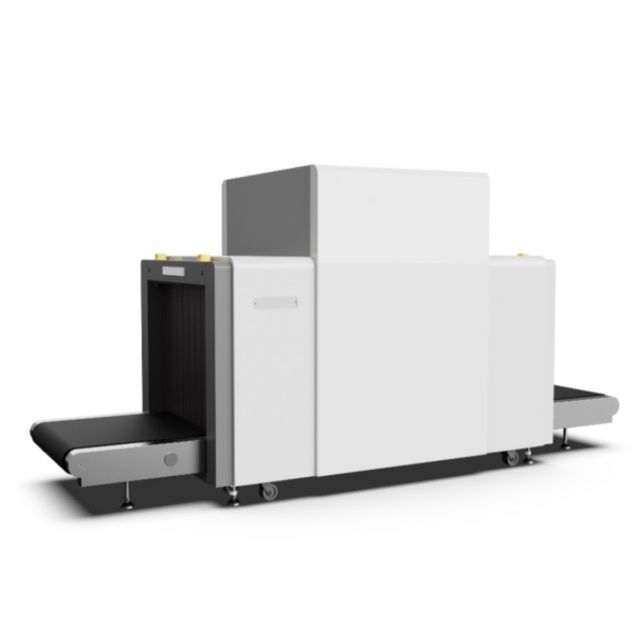
An x-ray scanner machine is widely used to identify potential threats hidden inside baggage and parcels. Instead of relying on labels or external appearance, it focuses on internal structure, density, and shape. This makes it possible to detect dangerous items even when they are intentionally concealed.
Sharp Objects and Tools
Knives, blades, and similar items usually appear as dense, clearly defined shapes. Their edges look sharp and consistent in the scan image. Even when placed inside soft materials, their structure remains visible. This helps operators quickly identify objects that could pose a risk.
Dense Suspicious Components
Compact or unusually heavy items often stand out due to strong X-ray absorption. These objects may be hidden inside electronics or packaging layers. Their density does not match surrounding materials, which makes them easier to flag during inspection.
Explosive-Related Patterns
Instead of identifying explosives directly, operators look for unusual combinations of materials and shapes. Irregular density clusters or complex assemblies may indicate potential threats. This method focuses on risk patterns rather than exact identification.
Material classification plays a key role in how an x-ray scanner machine works. Multi-energy scanning separates materials based on how they interact with X-rays. This allows operators to understand what type of substance is inside a parcel.
Organic Materials Recognition
Materials such as food, paper, or certain soft substances appear lighter in the image. Their lower density allows more X-rays to pass through. This creates a softer, less defined visual effect that helps distinguish them from harder materials.
Inorganic Materials Identification
Materials like glass or ceramics show moderate density. Their appearance is more structured compared to organic items. This helps operators differentiate everyday objects from potentially suspicious contents.
Metallic Objects Detection
Metals absorb more radiation and appear darker and more solid. Their high density makes them easy to identify, even in complex or crowded baggage. This is especially useful for detecting hidden tools or components.
An x-ray scanner machine is highly effective in revealing items hidden within other objects. Parcels often contain multiple layers, which makes manual inspection difficult. The scanning system shows internal structure clearly, allowing operators to see beyond outer packaging.
Concealed Items in Electronics
Devices normally follow predictable internal layouts. When extra components appear inside, they break that pattern. This difference helps identify hidden objects placed inside electronic items.
Layered Packaging Detection
Boxes and parcels often contain multiple layers of wrapping. Even when items are deeply hidden, their shape and density still appear. This allows operators to detect concealed contents without opening the package.
Unusual Placement Patterns
Objects placed in unnatural positions stand out quickly. For example, items hidden in hollow spaces or tightly packed corners create irregular visual patterns. These patterns often indicate intentional concealment.
Beyond identifying objects, an x-ray scanner machine helps detect unusual density distribution. This is critical in parcel inspection, especially when items are disguised or mixed with normal contents.
Dense Mass Concentration
Dark, concentrated areas often indicate compact or heavy objects. These regions may suggest concealed materials that require closer inspection. The contrast between dense and light areas makes them easier to detect.
Irregular Shapes and Structures
Objects that do not match expected shapes stand out in the scan image. A mismatch between the declared item and the internal structure often signals a problem. Operators rely on experience to recognize these inconsistencies.
Layered or Mixed Density Patterns
Multiple density layers can indicate attempts to hide objects. When materials are stacked in unusual ways, the image shows clear variation. This helps reveal hidden items even in complex packaging.
An x-ray scanner machine does more than show shapes. It uses color to help people understand what materials are inside a bag. This makes image reading faster, especially in busy checkpoints. Instead of guessing, operators rely on visual patterns created by the system.
Organic Material Colors
Organic items such as food, paper, or certain soft substances usually appear in warm tones. These colors help signal low-density materials. When scanning luggage, these areas often represent everyday items, which reduces unnecessary concern.
Metal and Dense Material Colors
Metals and dense objects appear in darker or cooler tones. Their strong absorption of X-rays creates solid visual blocks. These areas attract attention because they often represent tools, components, or concealed items.
Mixed Material Representation
Some objects contain multiple materials. These appear in blended or layered colors. This makes them more complex to interpret, so operators look carefully at both color transitions and shape.
Color coding allows quick decisions. In high-traffic environments, speed matters. A well-trained operator can scan an image in seconds and identify areas that need closer inspection.
| Color Category | Material Type | Visual Meaning |
|---|---|---|
| Warm tones | Organic materials | Low density, softer contents |
| Neutral tones | Mixed materials | Combined or layered objects |
| Dark / cool tones | Metals and dense objects | High density, potential concern |
Beyond color, an x-ray scanner machine uses density and atomic number to differentiate materials. These factors determine how much radiation a material absorbs. Higher density materials absorb more, while lighter materials allow more rays to pass through.
Density-Based Differentiation
Dense objects appear darker and more compact in the image. Light materials look softer and less defined. This contrast helps operators identify unusual concentrations inside baggage.
Atomic Number Influence
Materials made of heavier elements interact differently with X-rays. This creates distinct visual patterns. It allows the system to separate materials even when shapes look similar.
Interpretation Limitations
Not every object is easy to classify. Some materials share similar density levels, which can make interpretation challenging. In these cases, operators rely on experience and context to make decisions.
In real screening, interpretation combines multiple factors. Color, shape, and density all work together. This layered analysis improves detection accuracy in complex baggage.
Different types of x-ray scanner machine systems offer different levels of detection capability. The choice depends on inspection needs, traffic volume, and required accuracy.
Single View Systems
These systems provide one image angle. They are suitable for simple screening tasks. In low-density or less crowded baggage, a single view is often enough to identify contents clearly.
Dual View Systems
Dual view machines capture images from two angles. This helps reveal objects hidden behind others. Overlapping items become easier to interpret, which improves detection in busy environments.
CT X-Ray Scanner Machines
CT systems go further by creating cross-sectional images. They provide more detailed information about internal structure and density. This is useful for complex parcels or high-security applications.
An x-ray scanner machine is used in many places where safety and inspection speed matter. Airports are the most familiar example, where every piece of baggage passes through screening before boarding. In these environments, the system helps security teams quickly check large volumes of luggage without opening each bag.
Beyond airports, logistics hubs rely heavily on scanning technology. Parcels move continuously through sorting centers, and inspection must keep up with that pace. An x-ray scanner machine allows operators to check packages while they stay sealed, which supports both efficiency and security. Government buildings and public venues also use these systems at entry points, where they help detect restricted items before they enter controlled areas.
An x-ray scanner machine improves inspection workflows in several important ways. Speed is one of the most obvious benefits. Instead of manually opening each parcel, operators can review internal contents in seconds. This allows high-throughput environments to maintain flow without sacrificing control.
Accuracy also improves because the system provides consistent imaging for every item. Manual inspection can vary depending on experience or fatigue, but scanning produces standardized results. This makes it easier to detect irregularities and maintain uniform inspection quality across different shifts and locations.
Another advantage lies in reducing physical handling. Packages remain sealed during inspection, which lowers the risk of damage. This is especially important for fragile goods or sensitive shipments. At the same time, it minimizes direct contact, which can improve both safety and hygiene in certain environments.
Safety is often a primary concern when using an x-ray scanner machine. Modern systems are designed to operate under strict safety controls, ensuring that radiation exposure remains very low during normal use. Shielding is built into the structure of the machine, which prevents X-rays from escaping into the surrounding environment.
During operation, safety features such as interlocks and sensors help control exposure. The system only generates X-rays when conditions are safe, and it stops automatically if a fault is detected. This layered protection helps maintain a controlled inspection process in busy environments.
Regulatory standards also play an important role. Most x-ray scanner machines are designed to meet international safety requirements. These standards define acceptable exposure levels and testing procedures, which ensures the equipment can be used in public spaces such as airports, stations, and office buildings.
CT scanners offer deeper imaging and higher detection accuracy, while conventional x-ray scanner machine systems provide faster and cost-efficient screening. Eastimage delivers both solutions, combining stable performance and flexible applications to improve security efficiency.
A: CT gives 3D imaging, x-ray scanner machine shows 2D images.
A: CT improves detection accuracy in complex baggage inspection.
A: It uses X-rays to show shape, density, and material.
A: Yes, CT systems cost more but offer advanced detection.
A: They are used in airports, logistics hubs, and public security.