- All
- Product Name
- Product Keyword
- Product Model
- Product Summary
- Product Description
- Multi Field Search
Views: 0 Author: Site Editor Publish Time: 2026-09-29 Origin: Site


Security checkpoint operations demand absolute reliability. Power anomalies or sudden electrical outages lead to immediate operational bottlenecks. When screening equipment fails, security lines halt, threat detection is compromised, and high-cost imaging hardware faces potential damage. Facility managers and security directors frequently finalize scanner procurement before auditing their existing electrical infrastructure. This misalignment results in delayed deployments, costly electrical retrofits, and voided warranties due to improper power supply.
Implementing a proactive electrical strategy prevents these failures. Evaluating dedicated circuits, power conditioning, and Uninterruptible Power Supply (UPS) systems represents a critical path for any new checkpoint deployment. Proper electrical planning ensures continuous operation, protects sensitive imaging sensors, and maintains high-throughput screening during facility power transitions. You must align your facility's electrical capacity with the specific demands of modern screening technology before installation begins.
Dedicated Infrastructure is Non-Negotiable: X-ray scanners require dedicated circuits with isolated grounds to prevent electrical noise from degrading image quality or triggering false diagnostics.
Inrush Current Dictates Circuit Sizing: Circuit breakers and UPS systems must be sized to handle the initial power surge (inrush current) of the X-ray generator, not just the steady-state operating draw.
Online Double-Conversion UPS is the Standard: Line-interactive UPS models are insufficient for sensitive security equipment; online double-conversion models are required to provide zero-transfer-time battery backup and active power conditioning.
Variable Loads and Thermal Impact Facility Planning: X-ray scanner power consumption directly translates to heat generation, requiring integrated HVAC planning that accounts for both peak throughput and auto-sensing standby modes.
Table of Contents
Establishing baseline electrical specifications keeps screening equipment operational without tripping breakers or degrading component lifespan. You must map the exact power demands of your chosen equipment to your facility's available electrical panels. Failing to match these specifications leads to unstable imaging, frequent system reboots, and premature failure of the X-ray generator tubes.
Most standard baggage scanners use 110V/120V or 220V/240V single-phase power and can often connect to existing building electrical systems. High-capacity CT scanners require three-phase power, which may involve major electrical upgrades. To protect sensitive imaging systems from electrical noise, isolated grounding and proper power quality management are essential.
Steady-state power consumption for standard scanners ranges from 0.5 kVA to 3.0+ kVA. This draw depends heavily on the tunnel size, the conveyor motor rating, and the X-ray generator's strength. Evaluating x ray scanner power requirements requires a close look at the machine's specific operational capabilities and the physical environment where it will operate.
Penetration capabilities directly correlate to power demands. A machine designed to achieve 34mm steel penetration requires a high-kV generator, which draws significantly more continuous current than a basic mailroom scanner. High-resolution imaging arrays also require stable, continuous power to process dense data streams from the detector diodes to the image processing computers.
Modern auto-sensing features introduce variable power draws. The machine automatically transitions between active scanning and standby modes based on luggage presence. When the conveyor belt stops and the X-ray beam shuts off, energy consumption drops. This variable load impacts your average daily energy calculations but does not reduce the peak capacity requirements for your electrical panels.
Scanner Category | Typical Voltage | Steady-State Draw (kVA) | Estimated Inrush (kVA) |
|---|---|---|---|
Mailroom / Small Parcel | 110V / 120V Single-Phase | 0.5 - 0.8 | 1.5 - 2.4 |
Standard Checkpoint Baggage | 120V / 220V Single-Phase | 1.0 - 1.5 | 3.0 - 4.5 |
Large Cargo / Pallet | 220V / 240V Single-Phase | 2.0 - 3.0 | 6.0 - 9.0 |
3D CT Baggage Scanner | 208V / 480V Three-Phase | 4.0 - 7.0+ | 12.0 - 21.0+ |
Inrush current is the short power surge that occurs when a scanner starts, often reaching several times the normal operating current. Circuit design must account for this peak demand to prevent nuisance breaker trips and startup failures. Proper breaker selection, suitable wire sizing, and commissioning tests ensure reliable scanner operation.
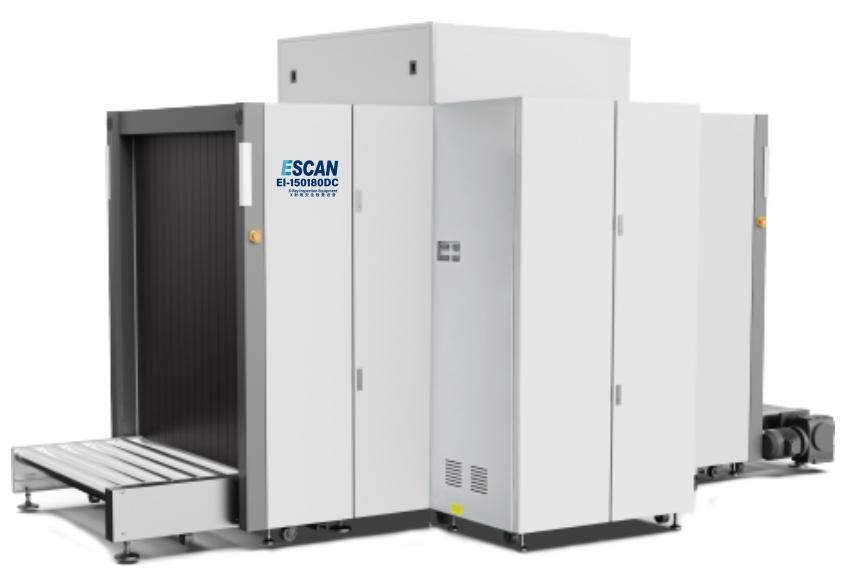
The physical facility must adapt to support the electrical demands of modern screening technology. Checkpoint environments require specific infrastructure modifications to ensure safe, continuous, and compliant operations. Retrofitting an existing lobby or concourse demands precise coordination between electrical contractors, HVAC technicians, and security integrators.
X-ray scanners should use dedicated electrical circuits to avoid voltage fluctuations, electrical noise, and system failures caused by other equipment. Independent wiring with proper grounding improves image stability, protects sensitive electronics, and helps maintain manufacturer warranty requirements.
Scanner power consumption becomes heat inside the checkpoint area, requiring proper HVAC planning. Cooling systems must handle peak operating loads, not only standby conditions. Good ventilation and heat removal prevent computer failures, generator overheating, and reduced equipment lifespan.
Safe cable routing is essential for permanent scanner installations. Floor boxes, overhead power routes, or secure conduit systems prevent trip hazards and accidental disconnection. Proper receptacle placement and protective connections ensure reliable operation while maintaining workplace safety standards.
Determining the most reliable power backup methodology is critical for continuous security operations. Raw utility power is rarely clean enough for sensitive imaging equipment. You must implement robust power conditioning and backup strategies to protect the hardware and maintain screening throughput during grid fluctuations.
Standard surge protectors only block short voltage spikes and cannot handle power drops, outages, or unstable frequency conditions. X-ray scanners need continuous, clean power to protect image systems, operating software, and sensitive generator components from damage.
Line-interactive UPS systems provide basic backup but may have brief transfer delays that affect sensitive scanner electronics. Online double-conversion UPS systems continuously regenerate clean power, providing zero transfer time and better protection against voltage fluctuations, noise, and harmonic distortion.
Feature | Line-Interactive UPS | Online Double-Conversion UPS |
|---|---|---|
Transfer Time to Battery | 4 to 8 milliseconds | Zero milliseconds (Seamless) |
Power Conditioning | Basic voltage regulation (AVR) | Continuous AC-DC-AC conversion |
Protection Level | Moderate (Surges, Outages) | Maximum (Frequency drift, harmonics, sags) |
Suitability for X-Ray Scanners | Not Recommended | Mandatory Standard |

Sizing the UPS requires precise calculations based on the specific scanner model. You cannot simply match the UPS kVA rating to the scanner's steady-state draw. You must account for the inrush current and the inevitable degradation of the UPS batteries over their 3-to-5-year lifespan.
Use this formula: Total scanner kVA + 30% overhead. This overhead accommodates the inrush current during startup and ensures the UPS inverter is not pushed to 100% capacity, which generates excess heat and shortens the unit's lifespan. If your scanner draws 2.0 kVA, you need a minimum 2.6 kVA UPS, meaning you should purchase a 3.0 kVA unit.
Runtime requirements dictate the physical size of the battery bank. Sizing a UPS for a "safe shutdown" typically requires 10 to 15 minutes of runtime. This allows operators to clear the tunnel, retrieve passenger belongings, and power down the software gracefully without corrupting the operating system.
Determine the maximum kVA draw of the X-ray scanner from the manufacturer's specification sheet.
Multiply the maximum kVA by 1.3 to add the necessary 30% overhead for inrush and battery aging.
Define the operational goal: Safe shutdown (15 minutes) or continuous operation (bridging to a generator).
Select a UPS model that allows for external battery cabinets if your runtime requirements exceed the capacity of the internal batteries.
Successful checkpoint deployment requires treating electrical infrastructure and UPS sizing as foundational elements, not peripheral accessories. Ignoring power specifications leads directly to hardware failure, compromised threat detection, and operational downtime. You must secure clean, dedicated power to guarantee the high-resolution imaging required for modern security environments.
Decision-makers should shortlist UPS systems based strictly on double-conversion topology. Ensure the selected units provide adequate inrush capacity and integrate seamlessly with existing facility generators. Protecting the hardware investment starts at the electrical panel, long before the scanner is delivered to the site.
Initiate a formal site power audit with a licensed electrical contractor to map existing panel capacity and conduit pathways.
Request detailed power draw profiles, including peak inrush specifications and standby mode variations, directly from the X-ray scanner manufacturer.
Install dedicated branch circuits with isolated grounds (NEMA IG receptacles) for every planned scanner location to eliminate electromagnetic interference.
Calculate the total BTU output of the proposed equipment and verify that the checkpoint HVAC system can handle the peak thermal load.
Procure online double-conversion UPS systems sized with a 30% capacity overhead to handle inrush currents and bridge generator transfer times.
A: Power consumption typically ranges from 0.5 kVA to 3.0 kVA. This depends heavily on the tunnel size, the strength of the X-ray generator, and the technology type. Standard 2D single-view mailroom scanners draw closer to 0.5 kVA, while high-throughput 3D CT baggage scanners require significantly more power to operate rotating gantries and advanced sensor arrays.
A: Machines equipped with object sensors automatically enter standby modes when luggage is absent from the conveyor. This shuts off the X-ray generator and stops the belt motor. This feature significantly reduces continuous power draw and lowers the thermal output (BTUs) dumped into the checkpoint area during low-traffic periods.
A: No. X-ray scanners require dedicated branch circuits. Plugging them into shared outlets exposes the sensitive imaging computers to voltage drops caused by other devices on the same circuit. Shared lines also introduce electromagnetic interference, which degrades image quality and often voids the manufacturer's warranty.
A: Online double-conversion UPS systems provide zero transfer time during a power outage. They continuously convert AC to DC and back to AC, delivering perfectly clean power. Cheaper line-interactive models have a 4-8 millisecond transfer gap, which is long enough to cause the scanner's internal computers to crash and reboot.
A: You can calculate thermal output by converting the machine's wattage into British Thermal Units (BTUs). One watt of electrical power equals approximately 3.41 BTUs per hour. A scanner drawing 1,500 watts will generate roughly 5,115 BTUs of heat per hour, which the facility's HVAC system must manage.
A: During a brownout (voltage sag), the scanner's power supply struggles to maintain adequate voltage for the internal components. This causes the operating system to freeze or crash, risking severe data corruption. It can also cause the cooling fans to fail while the X-ray tube is hot, leading to permanent hardware damage.